

How to Choose a South Asian Therapist in Ontario
Written by Jason Bains, MACP, RCC, RP (Qualifying) · Reviewed October 2026
This content is for informational purposes only and does not constitute professional mental health advice, diagnosis, or treatment. If you are experiencing a mental health crisis, please contact the 9-8-8 Suicide Crisis Helpline at 9-8-8.
To choose a South Asian therapist in Ontario, check three things: that they are registered to practise psychotherapy in Ontario, that they have real experience with South Asian individuals and families, and that sessions can happen somewhere you feel private. Online sessions widen your choice to the whole province, so you are not limited to whoever has an office nearby.
The rest of this guide covers how to check each of those, what to ask on a free consultation, and what fees and insurance usually look like.
Why Cultural Fit Matters Enough to Look For
South Asians are the largest racialized group in Canada, about 2.6 million people, yet a CAMH and Mental Health Commission of Canada research summary notes that South Asians in Canada are up to 85 per cent less likely to access mental health services (CAMH and MHCC, Culturally Adapted CBT for Canadians of South Asian Origin). The same project trained therapists in the Greater Toronto Area and Ottawa to adapt cognitive behavioural therapy for South Asian clients, because the standard version was developed in a Western context.
In practice, cultural fit means you spend your sessions on what is actually hurting, instead of the first three explaining why you cannot simply move out, why your parents’ opinion of your marriage carries weight, or why “just set a boundary” is not a sentence that works in your house.
It does not mean you must see a therapist with the same background as you. Some people want that. Others prefer someone outside the community for privacy. Both are reasonable, and a good therapist will not be offended by either preference.
Check That They Can Practise in Ontario
Anyone can call themselves a therapist. In Ontario, psychotherapy is a regulated act, and the people who can provide it include Registered Psychotherapists, registered social workers, psychologists and some physicians and nurses.
Before you book, look the person up:
- Registered Psychotherapists are listed on the public register of the College of Registered Psychotherapists of Ontario (CRPO). You will see either “RP” or “RP (Qualifying)”. A Qualifying registrant is fully registered with CRPO and practises under clinical supervision while completing the final steps toward independent practice.
- Registered Social Workers are listed by the Ontario College of Social Workers and Social Service Workers.
A therapist based in another province needs Ontario registration to work with you while you are in Ontario. This matters most with online counselling, where the therapist’s own location is easy to miss. Ask directly: “Are you registered to practise in Ontario?”
Plan for Privacy Before You Plan the Session
Many South Asian clients live in multigenerational homes, share walls with parents or in-laws, or have family who drop in without notice. That is often the real barrier to starting, more than cost or time.
Practical options that clients use:
- Sessions from a parked car, a quiet room at work, or a friend’s place
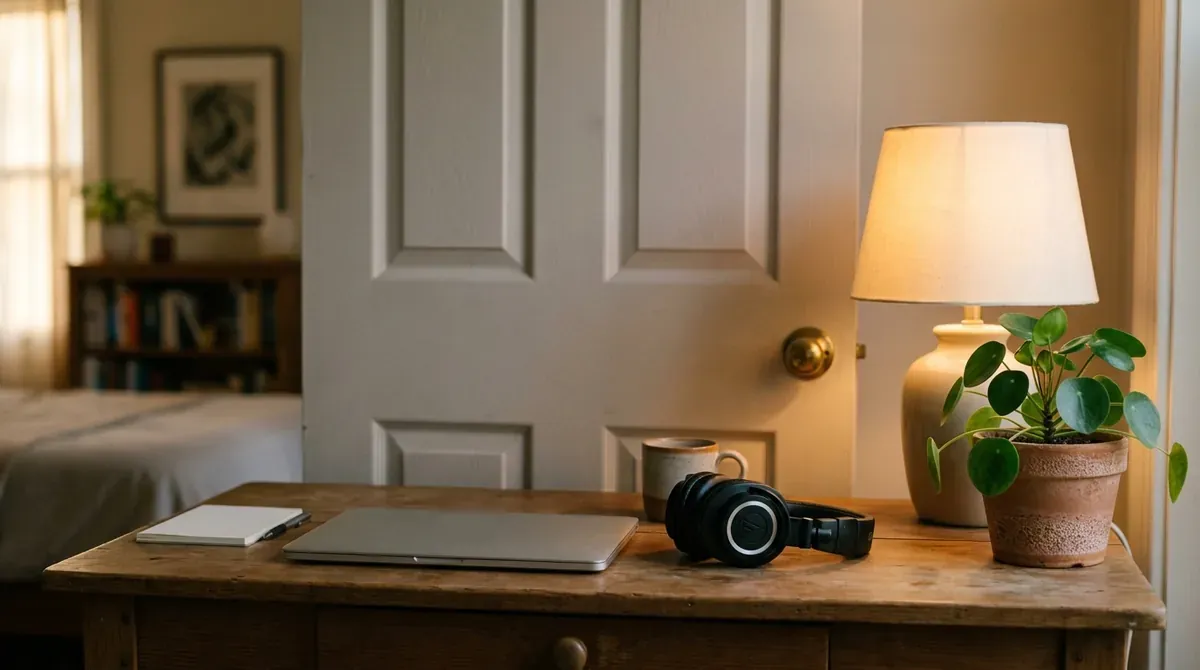
- Headphones, so only your side of the conversation can be heard
- Early morning or lunch-hour appointments when the house is empty
- A calendar entry that says “appointment” rather than “therapy”
Ask the therapist how they handle a session that has to stop suddenly because someone walks in. A therapist who works with South Asian clients will have a plan for this already, such as an agreed word that means “I need to end now” and a quick follow-up by message.
Ask, too, exactly who can see your records and what would appear on an insurance claim or bank statement. If your benefits come through a parent’s or spouse’s plan, claims may be visible to them.
Questions to Ask on a Free Consultation
Most practices offer a short free call. Use it. These questions tell you more than a profile page:
- How much of your work is with South Asian clients? You want specifics, not “I work with everyone.”
- What happens when what I want conflicts with what my family expects? Listen for curiosity. A therapist who jumps straight to “you need to put yourself first” may not understand the stakes.
- Have you worked with intergenerational conflict, marriage pressure or career expectations? Name the issue that brought you here.
- Can family members join a session later if I want them to? Some people start alone and bring in a partner or parent once they are ready.
- What approaches do you use, and why? Internal Family Systems (IFS) and cognitive behavioural therapy (CBT) are common. The answer should make sense to you.
- How soon can I start, and how often would we meet?

Notice how the call feels as well as what is said. You should come away feeling you could say the difficult thing in session three without bracing for a lecture.
What It Costs and What Insurance Covers
Private counselling in Ontario is not covered by OHIP. Most people pay per session and claim it back through extended health benefits.
Before booking:
- Check your plan’s wording. Plans name the professions they reimburse, such as “Registered Psychotherapist” or “Registered Social Worker”. Some do not yet list “RP (Qualifying)”, so ask your insurer directly.
- Check the annual limit. Many plans cap mental health coverage per year, which decides how many sessions are covered.
- Ask about receipts. You will need the practitioner’s name, registration number and the service on each receipt.
Our current session fees are listed on the fees page, and we offer direct billing for eligible plans and programs. A free consultation is a good time to ask what your plan is likely to cover.
Online Sessions Across Ontario
For many people in Brampton, Mississauga, Toronto and Markham, the nearest therapist with the right cultural fit is not necessarily close by, and walking into a local office can feel exposed in a tight-knit community. Secure video sessions remove both problems. You get the same 50-minute session from wherever you are private.
Online sessions also suit people outside the larger centres, where finding a South Asian therapist nearby can be close to impossible. Our page on whether online counselling works covers who video sessions suit and when in-person is the better choice.

Working With The Counselling HUB
We offer culturally responsive South Asian counselling in Ontario by secure video. In Ontario, sessions are with Jason Bains, a Registered Psychotherapist (Qualifying) with CRPO (#18589) and a Registered Clinical Counsellor in BC. If you live in British Columbia, see our South Asian counselling in Nanaimo and across BC.
If the family side is what is holding you back, our article on South Asian families and the decision to start therapy looks at that part in more depth. When you are ready, the contact page is the place to book a free 15-minute consultation.
If You Need Support Now
If you are in immediate danger, call 9-1-1. If you are having thoughts of suicide or feel unsafe, call or text 9-8-8, the Suicide Crisis Helpline, at any hour.
Source: Centre for Addiction and Mental Health and Mental Health Commission of Canada, Culturally Adapted Cognitive Behavioural Therapy for Canadians of South Asian Origin: A Research Study.
Thinking About Starting Therapy?
A free 15-minute consultation is a no-pressure way to ask questions and see if working together feels right.
Book a Free ConsultationKeep Reading

South Asian & 2SLGBTQIA+ Counselling
South Asian Families and the Decision to Start Therapy
South Asian & 2SLGBTQIA+ Counselling