

For parents and caregivers · Accredited Triple P provider
Parenting Counselling in Nanaimo
Support built for the parent, not the child. Accredited Triple P Positive Parenting strategies from the University of Queensland framework, matched to the child you actually have rather than the one the parenting books describe.
- ✓Accredited Triple P provider
- ✓Your child does not attend
- ✓Toddlers through teens
In person in Nanaimo · virtual across British Columbia
Written by The Counselling HUB · Reviewed June 2026
Parenting counselling at The Counselling HUB works with parents and caregivers directly, without the child in the room. Mary Stasiuk, MSW, RSW, is an accredited provider of the Triple P Positive Parenting Program developed at the University of Queensland, and pairs that structured framework with post-graduate training in IFS, CBT, and Emotionally Focused Therapy so you leave with strategies that hold up on a Tuesday night, not just in the session.
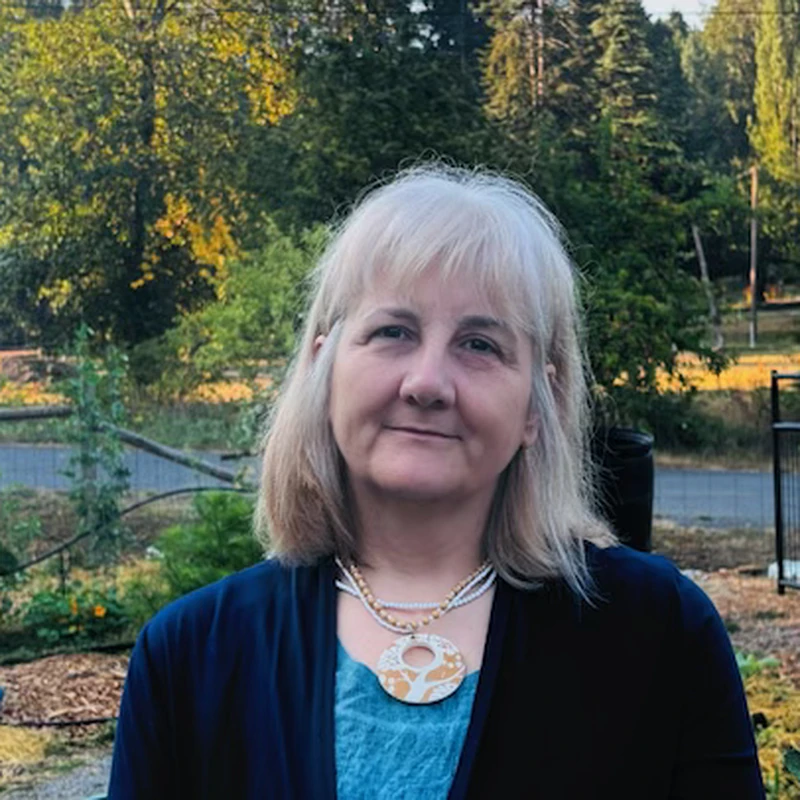
Your Counsellor for Parenting Counselling
Qualified to provide parenting counselling in Nanaimo and virtually across BC.
Parents usually reach out when
- Every request turns into a negotiation, then an escalation
- You are enforcing boundaries you no longer believe in, because backing down feels worse
- You hear your own parents in your voice and it stops you cold
- One child gets your patience and the other gets whatever is left
- Your child refuses to attend counselling, so you are looking for another way in
- You are managing two households and two sets of rules after a separation
Where the Triple P framework fits
Triple P was developed and tested across four decades at the Parenting and Family Support Centre at the University of Queensland, and its accreditation is competency-assessed rather than granted for attendance. That gives the work structure. The therapy training underneath it handles the part no framework covers: what gets triggered in you when your child pushes.
Triple P Positive Parenting Program
An evidence-based set of positive parenting strategies from the University of Queensland, matched to your child’s age and the specific behaviour in front of you.
How this worksInternal Family Systems (IFS)
Understand the part of you that snaps, withdraws, or over-explains - and where it learned to do that.
How this worksEmotionally Focused Therapy (EFT)
Repair the connection underneath the behaviour, so a boundary lands inside a secure relationship instead of replacing one.
How this worksHow parenting sessions run
- 1
Map the actual pattern
We track a real week - the flashpoints, what you tried, what happened next. Not a diagnosis of your child, a behavioural map you can both see.
- 2
Match the strategy
We select the Triple P strategies that fit your child’s age and the specific behaviour, then rehearse them until they feel usable rather than theoretical.
- 3
Deal with your side of it
Every strategy fails at the point you get triggered. We work on that directly with IFS and CBT, so consistency stops depending on how good your day was.
- 4
Review and adjust
You report back on what held and what collapsed, and we adjust. Parenting plans that survive contact with a real child are built iteratively.
Not sure if parenting counselling is the right starting point?
Efficient communication is a priority at The HUB and we will reply within 1-2 business days.
✓ A good fit for
- Parents of toddlers through teenagers who want strategy, not reassurance
- Parents whose child refuses to attend counselling themselves
- Co-parents aligning their approach across two households
- Parents supporting a child with anxiety, ADHD, or a recent diagnosis
! When another path fits better
- Court-ordered parenting capacity assessments or custody reports
- Active child protection concerns, which need MCFD involvement first
- Immediate safety risk to a child or parent - call 9-1-1
"You cannot control your child’s behaviour. You can control what you do next - and that turns out to be the lever that actually moves things.
If you are not sure where to start, you can also explore family counselling or youth and teen counselling. You can always book a first session directly to talk it through first.
Parenting Counselling - Common Questions
Parenting counselling works with the parents or caregivers directly, without the child in the room. Family counselling brings the household together to change the patterns between members. Many families use both, and we will help you decide which one to start with.
Triple P is an evidence-based parenting framework developed at the Parenting and Family Support Centre at the University of Queensland. It teaches a set of core positive parenting strategies that adapt to your child's age and the specific behaviour you are dealing with. Mary Stasiuk is an accredited Triple P provider.
No. Parenting counselling is built to work without the child present, which is often a relief for parents whose child refuses to attend therapy. Changing your response reliably changes the dynamic between you.
Yes. Co-parents can attend jointly to align strategy across two households, or separately when joint sessions are not workable. The focus stays on the children rather than on relitigating the relationship.
Support is available for parents of toddlers through to teenagers. Strategies are matched to your child's developmental stage, so the work with a parent of a four-year-old looks different from the work with a parent of a fifteen-year-old.
This content is for informational purposes only and does not constitute professional mental health advice, diagnosis, or treatment. If you are experiencing a mental health crisis, please contact the 9-8-8 Suicide Crisis Helpline at 9-8-8.
You Do Not Have to Figure This Out Alone
Efficient communication is a priority at The HUB and we will reply within 1-2 business days.