

Supporting a Loved One With Addiction Without Losing Yourself
Written by Mary Stasiuk, MSW, RSW · Reviewed September 2026

This content is for informational purposes only and does not constitute professional mental health advice, diagnosis, or treatment. If you are experiencing a mental health crisis, please contact the 9-8-8 Suicide Crisis Helpline at 9-8-8.
You can support someone you love through addiction without taking responsibility for their recovery. The difference between those two things is the single most useful distinction a family member can learn, and most people only learn it after years of exhaustion.
If you are the person who checks whether they came home, who covers for them at work, who counts the money in the drawer, this article is written for you rather than for them.
Families are the front line, whether or not anyone planned it
Addiction is usually described as something that happens between a person and a clinic. In practice, most of it happens at a kitchen table.
The BC Coroners Service reported that 1,826 people in British Columbia died from unregulated drug toxicity in 2025 — approximately a 21% decrease from the 2,315 deaths recorded in 2024, and the first year below 2,000 since 2020. Within that same reporting, the Coroners Service noted that 48% of deaths occurred in a private residence, compared with 20% outdoors.
That figure is worth sitting with. It means the most dangerous moments of this crisis are happening in homes, which means the people closest to them are family members with no clinical training, no shift change, and no one debriefing them afterwards. If you feel like you have been doing a job you were never hired for, that is an accurate reading of the situation.
What codependency actually means
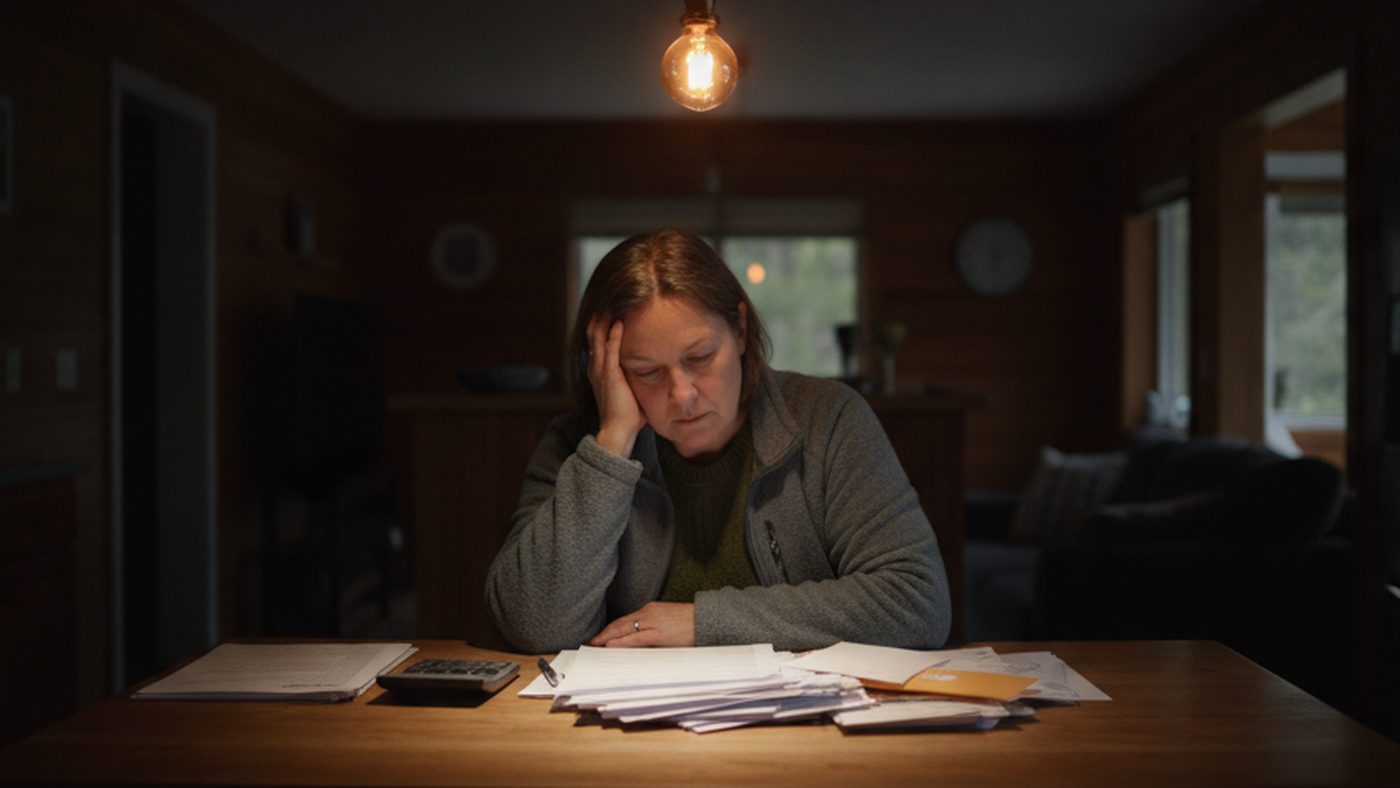
Codependency has been flattened into an insult. It gets used to mean weak, or clingy, or complicit. That is not what it describes.
Codependency describes a pattern where your sense of stability becomes tied to managing someone else’s behaviour. You start reading their mood before you check your own. You cancel plans in case you are needed. You become skilled at predicting a relapse and start treating prediction as prevention.
None of that is a character flaw. It is what happens when a person adapts intelligently to an unpredictable environment for a long time. The adaptation works, right up until it starts costing you your sleep, your health, and your other relationships.
Boundaries are behaviours, not ultimatums

The advice families usually receive is “set boundaries”, delivered as though it means issuing a final warning. It does not. An ultimatum is about controlling their behaviour. A boundary is about deciding your own.
The practical difference:
-
Ultimatum: “If you use again, we are finished.”
-
Boundary: “I am not able to have a conversation with you when you are using. I will talk tomorrow.”
-
Ultimatum: “You have to go to treatment.”
-
Boundary: “I will drive you to an appointment. I am not going to phone around and book it for you.”
A boundary is something you can keep on your own, without their agreement. That is what makes it hold. It also removes the negotiation that usually follows an ultimatum, which is where most families lose ground.
Boundaries are not punishment, and they do not require you to withdraw love. In our addiction counselling work we often find families have been offering endless flexibility and no predictability, when the person using would benefit more from the reverse.
Guilt, hypervigilance, and the burnout underneath them
Three things show up in almost every family member we meet on Vancouver Island.
Guilt that runs in both directions — guilt for not doing enough, and guilt for resenting how much you have already done. Both at once is normal and not a contradiction.
Hypervigilance, where your nervous system stays braced for the phone call. This is not a mindset problem. It is a physiological state, and it does not switch off just because you decide to stop worrying. It shows up as broken sleep, a short fuse, and difficulty concentrating at work.
Burnout, which arrives quietly. People rarely notice it as exhaustion. They notice it as numbness — the point where you stop feeling frightened for your loved one and start feeling nothing much at all. Numbness is not indifference. It is what depletion looks like.
When to get your own counsellor

You do not need to wait for your loved one to start treatment. You do not need their permission, and you do not need their diagnosis to justify your own support.
It is worth speaking to someone if you notice any of the following:
- You cannot describe what you want, only what you are afraid of
- Your own health, work, or friendships have visibly narrowed
- You feel responsible for outcomes you have no control over
- You have stopped telling anyone how bad it actually is
Counselling for a family member is not a strategy meeting about the person using. It is your own space, focused on what this has cost you and what you want to protect. For many people it is the first hour in years that is not about somebody else.
Getting support in Nanaimo
At The Counselling HUB we offer codependency counselling in Nanaimo for partners, parents, and adult children — in person at our Wentworth Street office, or virtually anywhere in British Columbia. Mary Stasiuk, MSW, RSW works with families navigating exactly this, and sessions are yours alone.
You are allowed to want your own life back. If you would like to talk it through, you can find out more about counselling in Nanaimo or reach out to book a first conversation.
If you or someone you love is in immediate crisis, call or text 9-8-8, the Suicide Crisis Helpline, available 24/7 across Canada.
Thinking About Starting Therapy?
A free 15-minute consultation is a no-pressure way to ask questions and see if working together feels right.
Book a Free Consultation