

Online Trauma Therapy for Adults: What Sessions Involve
Written by Jason Bains, MACP, RCC, RP (Qualifying) · Reviewed November 2026
This content is for informational purposes only and does not constitute professional mental health advice, diagnosis, or treatment. If you are experiencing a mental health crisis, please contact the 9-8-8 Suicide Crisis Helpline at 9-8-8.
Online trauma therapy for adults is one-to-one counselling by secure video with a registered therapist, paced so you stay steady rather than flooded. The early sessions focus on safety and skills, and you decide how much of what happened you talk about, and when.
This guide covers what the first sessions look like, the approaches you are likely to meet, how to make video sessions feel private, how to choose a therapist, and what it costs in Ontario and British Columbia.
Who Online Trauma Therapy Suits
Adults come to trauma therapy for many reasons. Some carry one event, such as an assault, a sudden death or a car crash. Others carry years of something harder to name: a childhood that never felt safe, a relationship that wore them down, or work that kept putting them near other people’s worst days.
You might notice:
- sleep that never feels restful, or nightmares that repeat
- being on edge, startling easily, or scanning every room
- feeling numb or far away, even with people you love
- avoiding places, people or conversations that bring it back
- anger or shame that seems bigger than the moment
You do not have to explain why something affected you the way it did, or prove that it “counts” as trauma. If an experience still shapes how you live, it is reason enough to talk to someone.
Online sessions suit adults who live far from a trauma-informed therapist, who find a waiting room hard, or who simply feel safer starting from their own space. They can be a good fit whether you live in Toronto, Ottawa, Windsor or a small town with no counsellor nearby.
What the First Sessions Usually Look Like
Every therapist works a little differently, but trauma therapy tends to move in three broad phases.
Building safety. The first sessions are mostly about getting to know you: what brings you in, what daily life looks like, and what already helps. You will not be asked to describe the worst moments before you are ready. Many people are surprised by how much of the early work is practical, such as sleep, grounding and noticing early signs that you are becoming overwhelmed.

Working with the memories, at your pace. Once you have tools to steady yourself, the work can turn toward what happened and the beliefs it left behind, such as “it was my fault” or “nowhere is safe”. This happens in small steps, and you can pause.
Living in the present. Later sessions focus on what you want your life to look like now: relationships, work, rest and the things you have been avoiding.
There is no fixed number of sessions. Some adults come for a few months around one event; others stay longer for deeper work. Your therapist should check in regularly on how it is going and whether the pace still feels right.
Approaches You Are Likely to Meet
Trauma therapists draw on several approaches. You do not need to choose one before you book, but it helps to know the names.
- Cognitive Processing Therapy (CPT) looks at the thoughts that formed around the trauma and whether they still fit. It was designed as a structured, session-by-session approach.
- Internal Family Systems (IFS) works with the different “parts” of you, such as the part that stays on guard and the part that shuts down, without forcing any of them to step aside.
- Somatic therapy pays attention to what happens in your body, because trauma often shows up as tension, a racing heart or feeling frozen.
A good therapist blends these based on what fits you, rather than expecting you to fit one model.
Does Trauma Therapy Work Online?
Video sessions have been studied directly for trauma. In a randomized trial of 126 women with post-traumatic stress disorder, Cognitive Processing Therapy delivered by video produced outcomes comparable to the same therapy delivered in person, and the authors noted that video can widen access for people in rural or remote areas (Morland and colleagues, 2015).
That does not mean video is the right choice for everyone. In person may suit you better if home is not private, if the person who hurt you lives with you, or if you simply feel more grounded in a room with someone. If you live near Nanaimo, you can switch between in-person and online sessions.
Making Video Sessions Feel Safe at Home
A few small choices make online trauma work feel more contained:
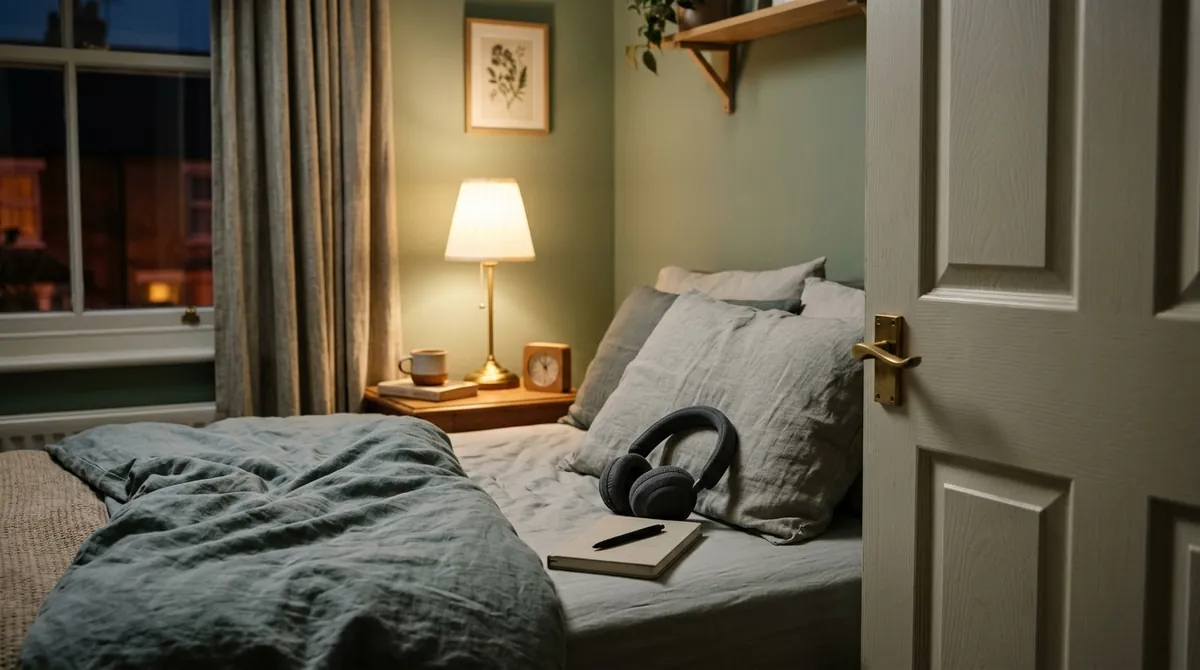
- Choose one spot and keep it. A closed room, a parked car or a quiet corner you can return to each time.
- Use headphones. Only your side of the conversation can then be heard.
- Have something grounding nearby. A blanket, a warm drink, or an object you can hold.
- Plan for the hour after. A short walk or a quiet cup of tea is better than going straight back into a work meeting.
- Agree on a pause signal. A word or gesture that tells your therapist you need to slow down, and a plan if the call drops.
How to Choose an Online Trauma Therapist
Our longer guide on how to choose a trauma counsellor covers this in depth. For online work, add these questions to your free consultation:
- Are you registered in my province? In Ontario, look for a Registered Psychotherapist, including RP (Qualifying), with the College of Registered Psychotherapists of Ontario, or a Registered Social Worker. In BC, look for a Registered Clinical Counsellor or a Registered Social Worker.
- What trauma training do you have? Ask which approaches they use and how they decide when to work with memories.
- How do you handle it if I become overwhelmed on screen? A clear answer here matters more than any technique.
- Which video platform do you use? It should be a secure platform built for health care, not a general meeting app.
- Can I start slowly? The answer should be yes.
What It Costs in Ontario and BC
OHIP and MSP do not cover sessions with a private counsellor or psychotherapist, but many extended health plans do. Our individual sessions are $150 for 50 minutes, the same in both provinces; see the Ontario fees page or the BC fees page. We offer direct billing for eligible plans and programs, and a receipt after every session.
Before your first session, check:
- whether your plan names the profession you are booking, such as “Registered Psychotherapist” or “Registered Clinical Counsellor”
- whether “Qualifying” registration is accepted, if you are in Ontario
- your annual limit for mental health services
If your trauma follows a car crash in BC, our guide to counselling after a car accident explains how ICBC coverage works.
Starting With The Counselling HUB
We offer online trauma therapy across Ontario and trauma counselling in Nanaimo and online across BC. In Ontario, sessions are with Jason Bains, a Registered Psychotherapist (Qualifying) with the CRPO (#18589) and a Registered Clinical Counsellor in BC, whose trauma-informed work draws on CPT, IFS and somatic approaches.
If you are not sure what trauma-informed care should feel like, our article on what trauma-informed means is a good place to start. When you are ready, book a free 15-minute consultation through the contact page, at your own pace.
If You Need Support Now
If you or someone else is in immediate danger, call 9-1-1. If you are having thoughts of suicide or feel unsafe, call or text 9-8-8, the Suicide Crisis Helpline, at any hour.
Source: Morland LA, Mackintosh MA, Rosen CS, et al. Telemedicine versus in-person delivery of cognitive processing therapy for women with posttraumatic stress disorder: a randomized noninferiority trial. Depression and Anxiety, 2015.
Thinking About Starting Therapy?
A free 15-minute consultation is a no-pressure way to ask questions and see if working together feels right.
Book a Free Consultation